








← Back to “Hymn to Intellectual Beauty” by Percy Bysshe Shelley
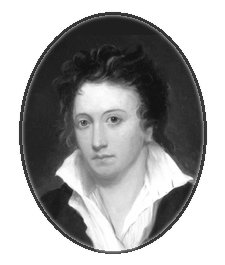
“Hymn to Intellectual Beauty” by Percy Bysshe Shelley — Literary Analysis
Overview
Percy Bysshe Shelley composed "Hymn to Intellectual Beauty" during the summer of 1816, on the shores of Lake Geneva, in the same weeks that produced its companion poem, Mont Blanc. Where Mont Blanc confronts an overwhelming natural power and asks what the mind can know of it, the Hymn takes a different approach: it addresses an unseen Spirit of Beauty that visits human consciousness without warning and departs without explanation. What emerges is less a philosophical argument than a prayer addressed to something that refuses to stay.
Shelley's title requires a moment's attention. "Intellectual" here does not mean cerebral or academic. It refers to something apprehended by the mind rather than the senses, a beauty beyond physical appearance. The poem opens with a cascade of similes for this power's fleeting visits: summer winds, moonbeams behind mountains, the memory of music. Each comparison catches something at the moment of its vanishing: wind moving on, light hidden, music already gone. The Spirit arrives and leaves, and the poem's central anguish is that no human effort can hold it in place. From this anguish Shelley builds something unexpected: not despair, but devotion.
The third stanza delivers the poem's sharpest argument. Shelley dismisses orthodox religion as a failed attempt to explain the same mystery. The names of "Demon, Ghost, and Heaven" are records of "vain endeavour," frail spells that cannot banish doubt or chance or mutability. Only the Spirit of Beauty, Shelley insists, gives "grace and truth to life's unquiet dream." The word "hymn" in the title is deliberate: Shelley replaces one form of worship with another. His religion has no creed, no scripture, and no guarantee that its god will appear when summoned.
The poem's autobiographical turn, in stanzas five and six, recounts how this faith began. As a boy, Shelley searched for ghosts in ruins and starlit woods, called on "poisonous names" fed to the young by religious tradition, and found nothing. Then, suddenly, the shadow of beauty fell on him and he "shrieked, and clasped my hands in ecstasy." He vowed to dedicate his life to this force and asks whether he has kept that vow. The closing stanza steps back from personal testimony and offers a broader vision: beauty descending "like the truth of nature" on a passive youth, binding him to fear himself and love all humankind. The poem ends not with certainty but with a gesture of ongoing submission to a power that remains, by its nature, inconstant.
Key Themes
- The transience of beauty and its inconstant visitations to human consciousness
- Secular devotion: the hymn form repurposed as worship of an unseen, non-religious power
- Rejection of orthodox religion as inadequate to explain the mystery of experience
- Self-dedication and the origin of poetic vocation
- Beauty as moral force, binding the worshipper to love humankind
Notable Craft Elements
- Cascading similes in stanza one (summer winds, moonbeams, evening hues, memory of music) establish beauty's inconstancy through accumulation rather than definition
- Shifting meter across each stanza: iambic pentameter gives way to a long hexameter line, then contracts to tetrameter for six lines before returning to pentameter, creating a wave-like cadence that mirrors the Spirit's arrivals and departures
- The hymn form itself functions as craft: by borrowing the structure of religious devotion, Shelley turns the poem's genre into its argument
- Vocabulary of inconstancy ('inconstant wing,' 'inconstant glance,' 'pass away,' 'depart') set against vocabulary of devotion ('consecrate,' 'dedicate,' 'vowed,' 'worships') creates a productive tension at the level of diction
Reread Prompt
On a second reading, pay attention to how Shelley uses the word 'shadow' throughout the poem. Is the Spirit of Beauty itself a shadow, or is what we experience merely its shadow? What difference does this distinction make to the poem's argument?
Historical Context
In the summer of 1816, Percy Bysshe Shelley, Mary Godwin, and their infant son traveled to Switzerland and settled near Lord Byron on the shores of Lake Geneva. The weeks that followed became one of the most productive periods in English literary history. Mary began Frankenstein; Byron wrote the third canto of Childe Harold's Pilgrimage; and Shelley composed two philosophical poems that would become central to his body of work. During a boating excursion around the lake with Byron between June 22 and June 30, Shelley conceived the Hymn to Intellectual Beauty. He continued working on it through late August, alongside Mont Blanc, which he drafted during a July excursion to the vale of Chamonix.
Shelley sent the finished poem to his friend Leigh Hunt, the radical journalist and editor. Hunt lost the manuscript. Shelley had to recreate a fair copy and send it again, and the poem finally appeared in Hunt's journal, The Examiner, on January 19, 1817. It was later collected in Rosalind and Helen, A Modern Eclogue; With Other Poems, published in 1819. In December 1976, a second finished version of the poem was discovered in the Scrope Davies Notebook, written in Mary Shelley's hand and containing notable differences from the published text. This find confirmed that the poem existed in multiple states during its composition.
The poem arrived at a turning point in Shelley's intellectual development. Queen Mab (1813) had been a polemicist's work, attacking religion and monarchy with materialist arguments and agitational energy. Three years later, among the Alps, Shelley's questions changed. He was no longer content to deny the supernatural; he wanted to understand what force, if not God, animated the human experience of beauty and awe. The Hymn and Mont Blanc represent this philosophical pivot: the first addresses an invisible spiritual beauty, the second an impassive natural force. Together they mark the moment Shelley moved from polemic to philosophical lyric.
Formal Analysis
The poem consists of seven stanzas, each twelve lines long, following a consistent rhyme scheme of abbaaccbddee. This pattern gives each stanza the compressed density of a sonnet without quite being one. The enclosed rhymes of the opening quatrain (abba) create a sense of containment, while the concluding couplets (ee) provide resolution, stanza by stanza, even as the poem's larger argument remains unresolved.
Shelley's handling of meter is one of the poem's most distinctive formal achievements. Each stanza moves through a deliberate rhythmic arc. The opening four lines are predominantly iambic pentameter, establishing a measured, declarative pace. The fifth line expands to iambic hexameter, stretching the rhythm to accommodate a more complex or emphatic statement. Lines six through eleven contract to iambic tetrameter, producing a quicker, more incantatory movement that recalls the cadence of actual hymns. The twelfth line returns to pentameter, grounding the stanza again. In stanza one, the effect is audible: the opening line, 'The awful shadow of some unseen Power,' moves in measured pentameter, while lines six and seven, 'It visits with inconstant glance / Each human heart and countenance,' quicken into tetrameter, the shorter line pushing the rhythm forward like a pulse. This expansion and contraction creates a wave-like effect, a pattern of reaching and retreating that enacts, at the level of rhythm, the poem's subject: the Spirit of Beauty arrives, swells, recedes, and passes.
Shelley employs frequent slant rhymes, particularly in the middle stanzas: 'upon' and 'gone' and 'shown' in stanza two, 'given' and 'heaven' in stanza three, 'sympathies' and 'eyes' in stanza four. These near-misses of sound reinforce the poem's theme of imperfect contact with an ideal that can never be fully grasped.
Thematic Analysis
The poem's opening stanza establishes its central problem through a sequence of similes rather than a definition. The Spirit of Beauty is like summer winds, like moonbeams behind a mountain, like evening hues, like memory of music, like anything that is "dear, and yet dearer for its mystery." Shelley piles comparison upon comparison because the Spirit cannot be named directly. It is known only through its effects, and those effects are intermittent. The word "inconstant" appears twice in the first stanza alone, and this inconstancy is both the poem's grief and its engine.
Stanza three delivers the poem's most direct philosophical claim. Conventional religion, Shelley argues, has tried to answer the same questions the Spirit of Beauty raises: why do fear, dream, death, and birth cast gloom on the daylight of this earth? The names offered by religion are "Demon, Ghost, and Heaven," and they are "frail spells" whose charm cannot banish doubt, chance, or mutability. This is Shelley the atheist, the young man expelled from Oxford for publishing The Necessity of Atheism, but the tone has changed. He does not mock religion here so much as find it insufficient. The Spirit of Beauty accomplishes what religion cannot: it gives grace and truth, however briefly, to lived experience.
The autobiographical stanzas (five and six) shift the poem from philosophical argument to personal testimony. Shelley recalls searching for ghosts as a boy, calling on the "poisonous names" of religious superstition, and finding nothing. The moment of conversion comes not through doctrine but through sudden, unbidden experience: "Sudden, thy shadow fell on me; / I shrieked, and clasped my hands in ecstasy!" The violence of this response (shrieking, clasping) contrasts sharply with the measured philosophical tone of the earlier stanzas. Shelley then vows to dedicate his powers to beauty, and asks whether he has kept that vow. The past tense and the question mark make this a reckoning, not a boast.
The final stanza resolves the poem not by claiming that beauty will remain but by accepting its terms. The day becomes "more solemn and serene / When noon is past"; autumn has a lustre that summer lacks. Shelley finds in decline itself a form of intensified beauty. The poem's last lines ask the Spirit to supply its calm to his "onward life" and bind him "To fear himself, and love all human kind." Beauty here is not merely aesthetic. It is a moral force, and the poem's closing act of submission is also an ethical commitment.
Language & Imagery
The poem's first stanza is built almost entirely from similes, and Shelley's choice of comparisons reveals his method. Summer winds creep from flower to flower: the emphasis is on gentle, lateral movement. Moonbeams shower behind a mountain: light is present but obscured. Evening hues and harmonies fade as the day dies. Clouds spread in starlight. The memory of music is music that has already stopped. Each image captures something at the point of its disappearing, and collectively they establish a vocabulary of presence-through-absence that governs the rest of the poem.
Light and shadow form the poem's dominant visual pattern. The Spirit is introduced as "the awful shadow of some unseen Power" in the first line. It visits with "inconstant glance." Its light is compared to "mist o'er mountains driven" and "moonlight on a midnight stream." In stanza five, Shelley's conversion occurs when "thy shadow fell on me." The word "shadow" here does double work: it is both the dim trace of something brighter and the covering, the falling-upon, of a larger presence. Shelley never resolves whether we experience the Spirit itself or only its shadow, and this ambiguity is essential to the poem's epistemology.
The vocabulary of religious devotion runs through the poem like a second voice. The Spirit "dost consecrate"; the speaker "vowed" and "worships"; the poem itself is a "hymn." Set against this are the words of loss: "pass away," "depart," "fade," "fled." The tension between these two registers, devotion and departure, gives the poem its distinctive emotional character. Shelley is not serene in his worship. He pleads: "Depart not as thy shadow came, / Depart not." The repetition carries genuine urgency.
Intertextual Connections
Shelley's most immediate precursor is William Wordsworth, whose "Ode: Intimations of Immortality from Recollections of Early Childhood" (1807) also mourns the fading of a visionary light experienced in youth. Both poems describe a spiritual power that illuminates the natural world and withdraws as the poet ages. But Shelley's relationship to Wordsworth is as much argument as inheritance. Where Wordsworth finds compensation in mature philosophical reflection and ultimately credits a Christian God, Shelley refuses both consolations. His Spirit of Beauty has no theological source, and his poem offers no guarantee that what was lost in childhood can be recovered in age.
The Platonic tradition stands behind the poem's central concept. Plato's Symposium describes a ladder of beauty ascending from physical attraction to the contemplation of absolute, abstract Beauty. Shelley would later translate the Symposium into English in 1818. But a crucial biographical detail complicates the connection: Shelley did not read the Symposium until August 1817, more than a year after composing this poem. His 1816 conception of intellectual beauty was shaped not by direct engagement with Plato but by the broader Platonic tradition as filtered through eighteenth-century aesthetics and his own experience of the Alpine landscape. When he did encounter Plato's text, it likely confirmed convictions already formed rather than originating them.
The Genevan landscape itself carried literary associations. Shelley had read Rousseau's Julie, or the New Heloise, set on the shores of Lake Geneva, and the novel's emphasis on the emotional and spiritual dimensions of natural beauty likely colored his response to the scenery that summer. The poem's relationship to Mont Blanc, its companion piece from the same summer, is illuminating. Mont Blanc addresses an indifferent natural power, the mountain, and asks what the human mind can make of it. The Hymn addresses a power that is neither natural nor indifferent but that shares Mont Blanc's essential unknowability. Read together, the two poems bracket Shelley's 1816 philosophy: one looks outward at the external world, the other inward at the mind's encounter with something beyond itself. Both arrive at a similar impasse, the impossibility of certain knowledge, but the Hymn transforms that impasse into an occasion for devotion rather than doubt.
Keats's Ode on a Grecian Urn (1819), written three years later, offers an instructive parallel. Both poems grapple with beauty's relationship to time. Keats finds beauty arrested in a physical object, the urn, where painted lovers and frozen pipers will never age. His beauty can be looked at, walked around, described surface by surface. Shelley's beauty has no surface at all. It visits and departs, and the poem draws its energy from this refusal to let beauty be located, held, or possessed. Where Keats ends with an equation (beauty is truth), Shelley ends with a plea (depart not).
Critical Reception
The poem attracted little notice at its first appearance. The Examiner's readership consisted mainly of Hunt's circle of radical sympathizers, and Shelley's verse was not widely reviewed in the major literary journals of the period. The poem reached a broader audience only through its inclusion in Rosalind and Helen in 1819 and through Mary Shelley's posthumous editions of her husband's collected works, which began appearing in the 1830s and 1840s.
Later critics recognized the Hymn as a pivotal text in Shelley's development and in the Romantic movement more broadly. It has been read as Shelley's most explicit statement of his secular faith and as evidence of his transition from the materialist polemics of Queen Mab toward the philosophical lyricism of Prometheus Unbound. Scholars have debated the poem's relationship to Platonic idealism: some read it as a faithful adaptation of the Symposium's ascending Beauty, while others stress Shelley's departures, his insistence that beauty is felt through earthly experience and imagination rather than approached through dialectic. The 1976 discovery of the Scrope Davies Notebook version added a textual dimension to these discussions, revealing that even the poem's final form was the product of significant revision.
Discussion Prompts
- Shelley calls his poem a 'hymn,' a word with strong religious associations. How does borrowing this form shape the poem's argument about beauty and religion? Does the hymn structure work for or against Shelley's rejection of orthodox faith?
- In stanza five, Shelley describes his boyhood search for ghosts and his invocation of 'poisonous names.' What are these names, and why does he call them poisonous? How does the sudden arrival of beauty's shadow contrast with the deliberate search that preceded it?
- Compare the similes in stanza one (summer winds, moonbeams, evening hues, memory of music) with the imagery in stanza seven (autumn, noon past, solemn serenity). How does the poem's imagery change between its opening and its close?
- The poem's final line binds the speaker 'To fear himself, and love all human kind.' Why would fearing oneself be a consequence of worshipping beauty? What does this self-fear add to the poem's moral vision?
- Read this poem alongside Shelley's Mont Blanc. Both were written in the same summer of 1816. What questions do they share, and where do they diverge? What does each poem suggest about the limits of human knowledge?
Frequently Asked Questions
- What does 'intellectual beauty' mean in Shelley's poem?
- Shelley uses 'intellectual' in its older philosophical sense: something apprehended by the mind, not the physical senses. Intellectual beauty is an invisible, abstract power that the poet experiences as sudden illumination rather than something seen or touched. It is closer to a spiritual awareness than to physical attractiveness.
- When and where was Hymn to Intellectual Beauty written?
- Shelley composed the poem during the summer of 1816 on the shores of Lake Geneva, Switzerland, where he was staying near Lord Byron. He conceived it during a boating excursion with Byron in late June. It was first published in Leigh Hunt's journal The Examiner on January 19, 1817.
- What is the rhyme scheme of Hymn to Intellectual Beauty?
- Each of the seven twelve-line stanzas follows the pattern abbaaccbddee. The enclosed rhymes (abba) in the opening quatrain give way to couplets (cc, dd, ee) in the second half. Shelley uses slant rhymes in several stanzas, reinforcing the theme of imperfect contact with an ideal.
- How does Shelley's poem relate to Plato's concept of beauty?
- The poem draws on the Platonic tradition of abstract, transcendent beauty but diverges from Plato in important ways. Plato's Symposium describes ascending toward absolute Beauty through dialectic; Shelley insists beauty can only be glimpsed through earthly experience and imagination. Notably, Shelley did not read the Symposium until 1817, after composing this poem.
- What is the connection between Hymn to Intellectual Beauty and Mont Blanc?
- Both poems were written during the same summer of 1816 at Lake Geneva and are often called companion or 'sister' poems. Mont Blanc confronts an external natural power; the Hymn addresses an internal spiritual one. Together they represent Shelley's philosophical thinking about the limits of human knowledge from two complementary angles.
- Why does Shelley call his poem a 'hymn'?
- The word 'hymn' deliberately borrows from religious tradition. Shelley, an outspoken atheist, replaces orthodox worship with devotion to the Spirit of Beauty. The hymn form becomes his argument: by using the structure of religious praise for a secular power, he performs the substitution the poem describes.
- What role does autobiography play in the poem?
- Stanzas five and six recount Shelley's boyhood search for ghosts and supernatural knowledge, his disillusionment with religious answers, and the sudden arrival of beauty's 'shadow' that transformed his life. He vows to dedicate his powers to beauty and asks whether he has kept that vow, turning the poem into a personal reckoning.
Sources
- Percy Bysshe Shelley. Hymn to Intellectual Beauty (poem text). The Examiner, 1817.
- M. T. Wilson (ed.). Hymn to Intellectual Beauty (RPO edition and annotations). Representative Poetry Online, University of Toronto.
- Encyclopaedia Britannica editors. Hymn to Intellectual Beauty. Encyclopaedia Britannica.
- The Constitution of Shelley's Poetry, Chapter 1. Cambridge University Press.
- Mary Shelley. Mrs. Shelley's note on the poem's composition. via Representative Poetry Online.
See something wrong on this page? Let us know.