

Poetry Lovers' Page

About John Keats

John Keats compressed into a few months what most poets spend decades attempting. Between January and September of 1819, still in his early twenties, he produced Ode to a Nightingale, Ode on a Grecian Urn, To Autumn, The Eve of St.

Read full biography →

British & American Poets

Poetry Lovers' Page

Recent Illustrations

Seasonal Spotlight

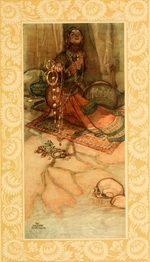
Seated jewel-adorned queen in embroidered robes counting necklaces before a human skull at her feet, in a sumptuous gilded interior. Memorial Day Poems 14 poems

Most Illustrated Poems

Keats Poem Collections

More by John Keats

  1. Ode To Psyche
  2. Ode To A Nightingale
  3. Ode On A Grecian Urn
  4. Ode On Melancholy
  5. Ode On Indolence
  6. To Autumn
  7. On First Looking Into Chapman Homer
  8. To One Who Has Been Long In City Pent

Browse by Theme

Explore

You May Also Enjoy

Random Poem

You are here: Home » British/American Poets » John Keats » Ode on a Grecian Urn


John Keats

John Keats

Ode on a Grecian Urn

Thou still unravish'd bride of quietness,
Thou foster-child of silence and slow time,
Sylvan historian, who canst thus express
A flowery tale more sweetly than our rhyme:
What leaf-fring'd legend haunts about thy shape
Of deities or mortals, or of both,
In Tempe or the dales of Arcady?
What men or gods are these? What maidens loth?
What mad pursuit? What struggle to escape?
What pipes and timbrels? What wild ecstasy?
Heard melodies are sweet, but those unheard
Are sweeter; therefore, ye soft pipes, play on;
Not to the sensual ear, but, more endear'd,
Pipe to the spirit ditties of no tone:
Fair youth, beneath the trees, thou canst not leave
Thy song, nor ever can those trees be bare;
Bold Lover, never, never canst thou kiss,
Though winning near the goal--yet, do not grieve;
She cannot fade, though thou hast not thy bliss,
For ever wilt thou love, and she be fair!
Ah, happy, happy boughs! that cannot shed
Your leaves, nor ever bid the Spring adieu;
And, happy melodist, unwearied,
For ever piping songs for ever new;
More happy love! more happy, happy love!
For ever warm and still to be enjoy'd,
For ever panting, and for ever young;
All breathing human passion far above,
That leaves a heart high-sorrowful and cloy'd,
A burning forehead, and a parching tongue.
Who are these coming to the sacrifice?
To what green altar, O mysterious priest,
Lead'st thou that heifer lowing at the skies,
And all her silken flanks with garlands drest?
What little town by river or sea shore,
Or mountain-built with peaceful citadel,
Is emptied of this folk, this pious morn?
And, little town, thy streets for evermore
Will silent be; and not a soul to tell
Why thou art desolate, can e'er return.
O Attic shape! Fair attitude! with brede
Of marble men and maidens overwrought,
With forest branches and the trodden weed;
Thou, silent form, dost tease us out of thought
As doth eternity: Cold Pastoral!
When old age shall this generation waste,
Thou shalt remain, in midst of other woe
Than ours, a friend to man, to whom thou say'st,
"Beauty is truth, truth beauty,"--that is all
Ye know on earth, and all ye need to know.

More by John Keats

  1. Ode To Psyche
  2. Ode To A Nightingale
  3. Ode On A Grecian Urn
  4. Ode On Melancholy
  5. Ode On Indolence

Literary Commentary

John Keats composed "Ode on a Grecian Urn" in May 1819, during the spring that produced all six of his great odes -- an ekphrastic poem (a poem that contemplates a work of visual art) whose painted scenes of lovers in pursuit, musicians piping beneath trees, and a sacrificial procession become the occasion for a meditation on what art preserves and what it necessarily loses. No other English Romantic lyric has provoked so sustained a critical argument about the relationship between beauty and truth.

The poem opens with a volley of questions aimed at the urn's silent figures, then turns to the paradox that makes those figures so compelling: the Bold Lover frozen mid-pursuit can never reach his beloved, yet she can never fade. What begins as celebration gradually darkens. By stanza three, the repeated word "happy" starts to sound strained, and Keats acknowledges what the urn's permanence excludes -- the "breathing human passion" that leaves real lovers feverish and spent. Stanza four introduces the most haunting image of all: a little town emptied of its people for a sacrifice, its streets silent forever, with no one left to explain why.

Few closing lines in English poetry have generated as much argument as "Beauty is truth, truth beauty." T. S. Eliot called it a serious blemish; Cleanth Brooks, writing in The Well Wrought Urn (1947), defended it as dramatic speech consistent with the poem's logic of paradox. The debate itself testifies to the poem's capacity to provoke genuine philosophical unease rather than settled admiration.

Among the 1819 odes, "Ode on a Grecian Urn" stands as Keats's most direct confrontation with the relationship between artistic permanence and lived experience. Read alongside "Ode to a Nightingale" and "To Autumn," it reveals a poet testing the same questions from different angles, never quite arriving at the same answer twice.

Key themes

  • Art's permanence against human transience
  • Ekphrasis and the limits of representing visual art in language
  • Desire frozen at the threshold of fulfillment
  • Silence as both preservation and loss
  • The contested equation of beauty and truth

Notable craft elements

  • Ekphrastic apostrophe: Keats addresses the urn directly, transforming a static object into a conversational partner that ultimately speaks back
  • Rhetorical questions as structural engine: stanza one contains seven questions, establishing interrogation rather than declaration as the poem's mode
  • Innovative ten-line stanza combining a Shakespearean ABAB quatrain with a variable Miltonic sestet (CDEDCE or CDECDE), creating a form that sets up and then reflects
  • Tonal modulation from celebratory warmth to the chill of "Cold Pastoral," tracking the poem's evolving argument through temperature imagery

Reread prompt

On a second reading, pay attention to the shift that occurs in stanza four, when Keats imagines the little town whose people have left for the sacrifice. What does this emptied, silent town reveal about the cost of the permanence the poem has been celebrating?

See something wrong on this page? Let us know.

x
By using our website, you agree to our cookie policy.