
Poetry Lovers' Page

About Kahlil Gibran

Kahlil Gibran was a Lebanese-American poet, prose writer, and visual artist who became, improbably, the third best-selling poet in history.

Read full biography →

British & American Poets

Poetry Lovers' Page

Recent Illustrations

Seasonal Spotlight

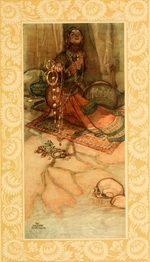
Seated jewel-adorned queen in embroidered robes counting necklaces before a human skull at her feet, in a sumptuous gilded interior. Memorial Day Poems 14 poems

Most Illustrated Poems

Gibran Poem Collections

More by Kahlil Gibran

  1. The Coming Of The Ship
  2. On Love
  3. On Marriage
  4. On Children
  5. On Giving
  6. On Eating And Drinking
  7. On Work
  8. On Joy And Sorrow

Browse by Theme

Explore

You May Also Enjoy

Random Poem

You are here: Home » British/American Poets » Kahlil Gibran » On Houses


Kahlil Gibran

Kahlil Gibran

On Houses

Then a mason came forth and said, Speak to us of Houses. And he answered and said:

Build of your imaginings a bower in the wilderness ere you build a house within the city walls.
For even as you have home-comings in your twilight, so has the wanderer in you, the ever distant and alone.
Your house is your larger body.
It grows in the sun and sleeps in the stillness of the night; and it is not dreamless. Does not your house dream? and dreaming, leave the city for grove or hilltop?
Would that I could gather your houses into my hand, and like a sower scatter them in forest and meadow.
Would the valleys were your streets, and the green paths your alleys, that you might seek one another through vineyards, and come with the fragrance of the earth in your garments.
But these things are not yet to be.
In their fear your forefathers gathered you too near together. And that fear shall endure a little longer. A little longer shall your city walls separate your hearths from your fields.
And tell me, people of Orphalese, what have you in these houses? And what is it you guard with fastened doors?
Have you peace, the quiet urge that reveals your power?
Have you remembrances, the glimmering arches that span the summits of the mind?
Have you beauty, that leads the heart from things fashioned of wood and stone to the holy mountain?
Tell me, have you these in your houses?
Or have you only comfort, and the lust for comfort, that stealthy thing that enters the house a guest, and then becomes a host, and then a master?
Ay, and it becomes a tamer, and with hook and scourge makes puppets of your larger desires.
Though its hands are silken, its heart is of iron.
It lulls you to sleep only to stand by your bed and jeer at the dignity of the flesh.
It makes mock of your sound senses, and lays them in thistledown like fragile vessels.
Verily the lust for comfort murders the passion of the soul, and then walks grinning in the funeral.
But you, children of space, you restless in rest, you shall not be trapped nor tamed.
Your house shall be not an anchor but a mast.
It shall not be a glistening film that covers a wound, but an eyelid that guards the eye.
You shall not fold your wings that you may pass through doors, nor bend your heads that they strike not against a ceiling, nor fear to breathe lest walls should crack and fall down.
You shall not dwell in tombs made by the dead for the living.
And though of magnificence and splendour, your house shall not hold your secret nor shelter your longing.
For that which is boundless in you abides in the mansion of the sky, whose door is the morning mist, and whose windows are the songs and the silences of night.

More by Kahlil Gibran

  1. The Coming Of The Ship
  2. On Love
  3. On Marriage
  4. On Children
  5. On Giving

Literary Commentary

In "On Houses," one of twenty-six prose poems from The Prophet (1923), Kahlil Gibran stages a confrontation between the shelter we build and the freedom we forfeit by building it. A mason asks the prophet Almustafa to speak about houses, and the answer he receives is less an architectural lecture than a warning: that the walls we raise for protection can become the walls of a prison, and that comfort, left unchecked, will devour the very passions it was meant to serve.

The poem unfolds in three movements. The first imagines an alternative world where valleys serve as streets and green paths as alleys, where people seek one another through vineyards rather than behind fastened doors. Gibran concedes that this vision remains unrealized, attributing the origins of city life to ancestral fear. The second movement pivots to interrogation: what do the people of Orphalese actually keep inside their houses? Peace, remembrance, beauty? Or merely comfort, which Gibran personifies as a thing that "enters the house a guest, and then becomes a host, and then a master." By the final movement, comfort has become a tamer wielding "hook and scourge," and Gibran counters with his most striking image: "Your house shall be not an anchor but a mast."

That nautical metaphor carries the weight of the entire chapter. An anchor holds a vessel in place; a mast propels it forward. Gibran is not arguing against shelter itself but against the kind of shelter that shrinks the inhabitant. The poem closes by insisting that what is "boundless" in us cannot be contained by any structure, that our true dwelling is "the mansion of the sky, whose door is the morning mist." Across The Prophet, Gibran returns again and again to this tension between attachment and release, and "On Houses" may state it most directly: the things we build to protect ourselves can just as easily trap us.

Key themes

  • Houses as extensions of the body and soul, reflecting the inner life of their inhabitants
  • The lust for comfort as a form of spiritual captivity that tames desire and dulls the senses
  • Freedom and the longing for open, natural spaces set against the confinement of city walls
  • Fear as the historical origin of human settlement and the continuing force that separates people from the natural world

Notable craft elements

  • Extended personification of comfort as an intruder who ascends from guest to host to master to tamer, giving an abstract concept dramatic narrative force
  • The nautical metaphor of anchor versus mast, condensing the entire argument into a single antithesis that redefines what shelter should mean
  • A prophetic rhetorical mode built on anaphoric questioning ("Have you..." repeated four times) that shifts the poem from exposition to direct moral challenge

Reread prompt

On a second reading, trace how Gibran moves from a collective history of fear ("your forefathers gathered you too near together") to a vision of individual liberation ("you, children of space"). At what point does the poem stop describing what is and begin demanding what should be?

See something wrong on this page? Let us know.

x
By using our website, you agree to our cookie policy.