








← Back to “Song to the Men of England” by Percy Bysshe Shelley
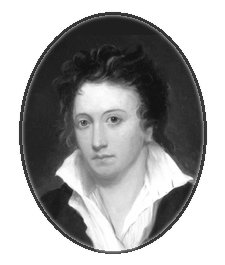
“Song to the Men of England” by Percy Bysshe Shelley — Literary Analysis
Overview
Percy Bysshe Shelley wrote "Song to the Men of England" in 1819, the same year that produced "England in 1819" and "The Masque of Anarchy." It is his most nakedly political lyric: eight quatrains in plain, singable English that ask England's laborers one question in several forms. Why do you feed, clothe, and arm the very people who oppress you? The question is not rhetorical decoration. It is the whole argument.
The poem builds its case through a single sustained metaphor. Workers are bees; the ruling class are "stingless drones" who consume the hive's produce without contributing to it. Shelley stretches this conceit across the first three stanzas, each one cataloguing a different kind of labor (ploughing, weaving, forging) that the idle consume. Then, in stanza four, the questions narrow from the national to the personal: "Have ye leisure, comfort, calm, / Shelter, food, love's gentle balm?" The indictment lands because it names what the workers lack, not just what they produce.
But the ending refuses to deliver the rousing call to revolution that the middle stanzas seem to promise. Stanza six does offer imperatives ("Sow seed,--but let no tyrant reap"), yet stanzas seven and eight collapse into bitter prophecy. If workers will not act, they will "trace your grave, and build your tomb" with the same tools they use for their masters. England itself becomes a "sepulchre." Whether this is a final goad or a concession to despair has divided readers since the poem first circulated in manuscript. The labor movements of the 1840s and 1890s chose to read it as a goad, adopting the poem as an anthem of resistance.
Key Themes
- Economic exploitation: workers create wealth that flows entirely to the ruling class
- Complicity of the oppressed in sustaining the systems that subjugate them
- The relationship between productive labor and political power
- Resistance versus passive submission to tyranny
Notable Craft Elements
- Trochaic tetrameter (a stressed-unstressed pattern, four beats per line) creates a marching, chant-like rhythm suited to oral recitation and protest
- AABB couplet rhyme scheme gives each pair of lines the snap of a finished argument
- Antithetical parallelism between stanzas 5 and 6 mirrors the poem's pivot from diagnosis to prescription
Reread Prompt
How does the tone shift between stanza six (which offers commands for resistance) and stanzas seven and eight (which predict self-destruction)? Is the ending meant as warning or as surrender?
Historical Context
Shelley composed "Song to the Men of England" during the political upheaval of 1819, while living in Italy far from the events he addressed. The Peterloo Massacre of August 16, 1819, in which the local yeomanry charged a peaceful reform rally at St Peter's Field in Manchester, killing between eleven and eighteen people and injuring hundreds, catalyzed a burst of political writing from Shelley. The Combination Acts of 1799 and 1800 had made trade unions illegal, and workers who organized for better conditions faced prosecution.
Shelley sent the poem to his friend and editor Leigh Hunt, hoping it would appear in The Examiner, but Hunt judged the poem too dangerous to print. The risk was real: the Six Acts passed later that year tightened restrictions on seditious publications. The poem remained unpublished until 1839, when Mary Shelley included it in her collected edition of his works, seventeen years after his death.
Formal Analysis
The poem consists of eight quatrains rhyming AABB, a form closer to broadside ballad than to the terza rima of "Ode to the West Wind" or the Spenserian stanzas of "Adonais." Shelley chose this deliberately. The predominantly trochaic tetrameter (a pattern of stressed then unstressed syllables, four beats per line) produces a hammering, insistent rhythm that suits public recitation.
In later stanzas, the meter shifts. Stanza five opens with "The seed ye sow, another reaps," a line whose iambic pulse replaces the trochaic hammer with something more measured, as if the poem is shifting from questioning to stating fact. The simple couplet structure suggests a poem meant to be heard aloud at meetings and workers' gatherings, not merely studied in private.
Thematic Analysis
The poem's eight stanzas trace a three-stage argument. Stanzas one through four are accusatory questions. Each "wherefore" demands that workers confront the absurdity of laboring for those who exploit them. Stanza five drops the questions and states the injustice as plain fact: "The seed ye sow, another reaps; / The wealth ye find, another keeps." The anaphoric structure (each line a complete theft, subject-verb-object) makes the pattern of dispossession inescapable.
Stanza six reverses the grammar. The same verbs (sow, find, weave, forge) reappear, now paired with imperatives that redirect the fruits of labor back to the workers: "Sow seed,--but let no tyrant reap." This is the poem's hinge, its moment of greatest rhetorical force.
Then stanzas seven and eight undercut the exhortation. If workers refuse to act, they become complicit in their own burial. The tools of labor (plough, spade, hoe, loom) become the tools of death (grave, tomb, winding-sheet). Shelley, an advocate of nonviolent resistance who elsewhere argued against violent revolution, here seems to acknowledge that inaction is its own form of destruction.
Language & Imagery
The poem's vocabulary is deliberately working-class: plough, weave, forge, spade, hoe, loom. These are the tools of agricultural and early industrial England. Against them stand the abstract nouns of power: lords, tyrants, drones. The central bee metaphor is compressed but effective. Calling the aristocracy "stingless drones" strips them of both productivity and menace; their power depends entirely on the workers' willingness to serve.
The final stanza replaces the bee imagery with funerary language. "Winding-sheet" and "sepulchre" are churchyard words, and their appearance in a poem about living labor creates a stark irony: continued obedience is a kind of premature burial. The shift from agricultural to funerary vocabulary tracks the poem's emotional arc from indignation to dread.
Intertextual Connections
"Song to the Men of England" belongs to a cluster of political poems Shelley wrote in 1819. "The Masque of Anarchy," his longest response to Peterloo, uses allegory and extended narrative to make a similar case. "England in 1819" compresses the same fury into a single sonnet. "Ozymandias," written the previous year, approaches the theme of tyranny through historical parable rather than direct address.
Together these poems represent Shelley's most sustained engagement with practical politics, a departure from the philosophical idealism of "Mont Blanc" or "Hymn to Intellectual Beauty." The poem also stands in a tradition of English protest verse that stretches from the ballad traditions of the laboring poor through Blake's "London" to the Chartist poetry of the 1840s, which explicitly adopted Shelley's work as a foundational text.
Critical Reception
Because Shelley could not publish the poem in his lifetime, its critical history begins posthumously. Mary Shelley's 1839 edition introduced it to a wider audience, and the Chartist movement of the 1840s quickly claimed it. By the 1890s, the poem had become a standard recitation piece at socialist gatherings. In the twentieth century, critics debated whether to read the poem as sincere revolutionary exhortation or as evidence of Shelley's unresolved tensions between radical politics and his stated opposition to violence.
Discussion Prompts
- Shelley calls the ruling class "stingless drones." If they have no sting, where does their power actually come from in the poem's logic? What does this suggest about the source of oppression?
- Compare stanza six (which offers commands) with stanzas seven and eight (which predict death). Does the poem end with hope or despair? What evidence supports each reading?
- How does the simple form of this poem (short stanzas, couplet rhyme, plain language) serve its political purpose differently from the more complex style of "The Masque of Anarchy"?
- Shelley opposed violent revolution. How do you reconcile this with the aggressive rhetoric of "Song to the Men of England"? Is the poem calling for violence, for something else, or is the tension deliberate?
- How does the rhetoric of this 1819 poem compare with the language of modern protest movements? What has changed about how political poetry addresses its audience, and what remains the same?
Frequently Asked Questions
- What is the main message of Shelley's Song to the Men of England?
- The poem asks England's workers why they continue to labor for a ruling class that exploits them. Through rhetorical questions and the metaphor of bees serving idle drones, Shelley argues that workers produce all the nation's wealth yet receive none of its benefits. The poem urges them to keep the fruits of their labor and warns that continued submission amounts to digging their own graves.
- Why was Song to the Men of England not published during Shelley's lifetime?
- Shelley sent the poem to his friend Leigh Hunt for publication in The Examiner, but Hunt judged it too politically dangerous to print. The Six Acts of 1819 had tightened laws against seditious publications, and the poem's open call for workers to resist their rulers risked prosecution. It was first published in 1839, seventeen years after Shelley's death, in Mary Shelley's collected edition of his works.
- What is the rhyme scheme and meter of Song to the Men of England?
- The poem consists of eight quatrains (four-line stanzas) with an AABB couplet rhyme scheme. The predominant meter is trochaic tetrameter, a stressed-unstressed pattern with four beats per line that creates a hammering, chant-like rhythm. In later stanzas, particularly stanza five, the meter shifts toward iambic, reflecting the poem's move from questioning to plain statement.
- What is the bee metaphor in Song to the Men of England?
- Shelley compares English workers to laboring bees and the aristocracy to "stingless drones" who consume the hive's produce without contributing. The metaphor emphasizes that the ruling class has no real power of its own -- they are "stingless" -- and depends entirely on the workers' continued willingness to serve. The workers create everything (food, clothing, weapons) while the drones merely consume.
- How does Song to the Men of England relate to the Peterloo Massacre?
- The poem was written in 1819 in response to the political crisis surrounding the Peterloo Massacre, in which the local yeomanry charged a peaceful reform rally in Manchester, killing between eleven and eighteen people. Though Shelley was living in Italy, the event catalyzed his most politically direct poems, including this work and The Masque of Anarchy.
- Does the poem end on a hopeful or despairing note?
- The ending is deliberately ambiguous. Stanza six offers commands for resistance, but stanzas seven and eight predict that passive workers will use their tools to build their own tombs, making England their "sepulchre." Some readers interpret this as a final provocation designed to shock workers into action; others read it as Shelley's bleak acknowledgment that resistance may never come. The labor movements of the 1840s and 1890s chose the first reading.
- How did Song to the Men of England influence the labor movement?
- After its posthumous publication in 1839, the poem was quickly adopted by the Chartist movement of the 1840s, which campaigned for parliamentary reform and workers' rights. By the 1890s it had become a standard recitation piece at socialist gatherings in Britain. Its simple language, chant-like rhythm, and direct address to working people made it well suited for political meetings and oral transmission.
Sources
- Mary Shelley (editor). Poetical Works of Percy Bysshe Shelley (1839 edition). Edward Moxon, 1839.
- Encyclopedia.com. "England in 1819" and Other Poems. Encyclopedia.com (Gale/Cengage).
- Wikipedia / Wikidata. Percy Bysshe Shelley. Wikimedia Foundation.
See something wrong on this page? Let us know.