









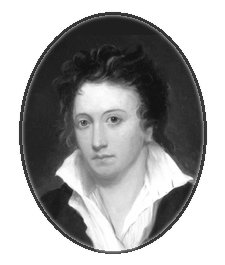
Percy Bysshe Shelley

Song to the Men of England
Read Next
Literary Commentary
Percy Bysshe Shelley wrote "Song to the Men of England" in 1819, the same year that produced "England in 1819" and "The Masque of Anarchy." It is his most nakedly political lyric: eight quatrains in plain, singable English that ask England's laborers one question in several forms. Why do you feed, clothe, and arm the very people who oppress you? The question is not rhetorical decoration. It is the whole argument.
The poem builds its case through a single sustained metaphor. Workers are bees; the ruling class are "stingless drones" who consume the hive's produce without contributing to it. Shelley stretches this conceit across the first three stanzas, each one cataloguing a different kind of labor (ploughing, weaving, forging) that the idle consume. Then, in stanza four, the questions narrow from the national to the personal: "Have ye leisure, comfort, calm, / Shelter, food, love's gentle balm?" The indictment lands because it names what the workers lack, not just what they produce.
But the ending refuses to deliver the rousing call to revolution that the middle stanzas seem to promise. Stanza six does offer imperatives ("Sow seed,--but let no tyrant reap"), yet stanzas seven and eight collapse into bitter prophecy. If workers will not act, they will "trace your grave, and build your tomb" with the same tools they use for their masters. England itself becomes a "sepulchre." Whether this is a final goad or a concession to despair has divided readers since the poem first circulated in manuscript. The labor movements of the 1840s and 1890s chose to read it as a goad, adopting the poem as an anthem of resistance.
Key themes
- Economic exploitation: workers create wealth that flows entirely to the ruling class
- Complicity of the oppressed in sustaining the systems that subjugate them
- The relationship between productive labor and political power
- Resistance versus passive submission to tyranny
Notable craft elements
- Trochaic tetrameter (a stressed-unstressed pattern, four beats per line) creates a marching, chant-like rhythm suited to oral recitation and protest
- AABB couplet rhyme scheme gives each pair of lines the snap of a finished argument
- Antithetical parallelism between stanzas 5 and 6 mirrors the poem's pivot from diagnosis to prescription
Reread prompt
How does the tone shift between stanza six (which offers commands for resistance) and stanzas seven and eight (which predict self-destruction)? Is the ending meant as warning or as surrender?
See something wrong on this page? Let us know.